 By
By I remember the summer I decided to install central air in my pre-war walk-up like it was yesterday. The sweltering heat had pushed me to the brink of madness, or so I thought. I envisioned a life of cool breezes wafting through the hallways, erasing the oppressive humidity that seemed to cling to every surface. But the reality hit like a freight train when the walls were torn open, unearthing decades of questionable wiring and mysterious insulation choices. It was like opening Pandora’s box, but instead of mythological woes, I got a hefty bill and a team of contractors who looked more bewildered with each new discovery.
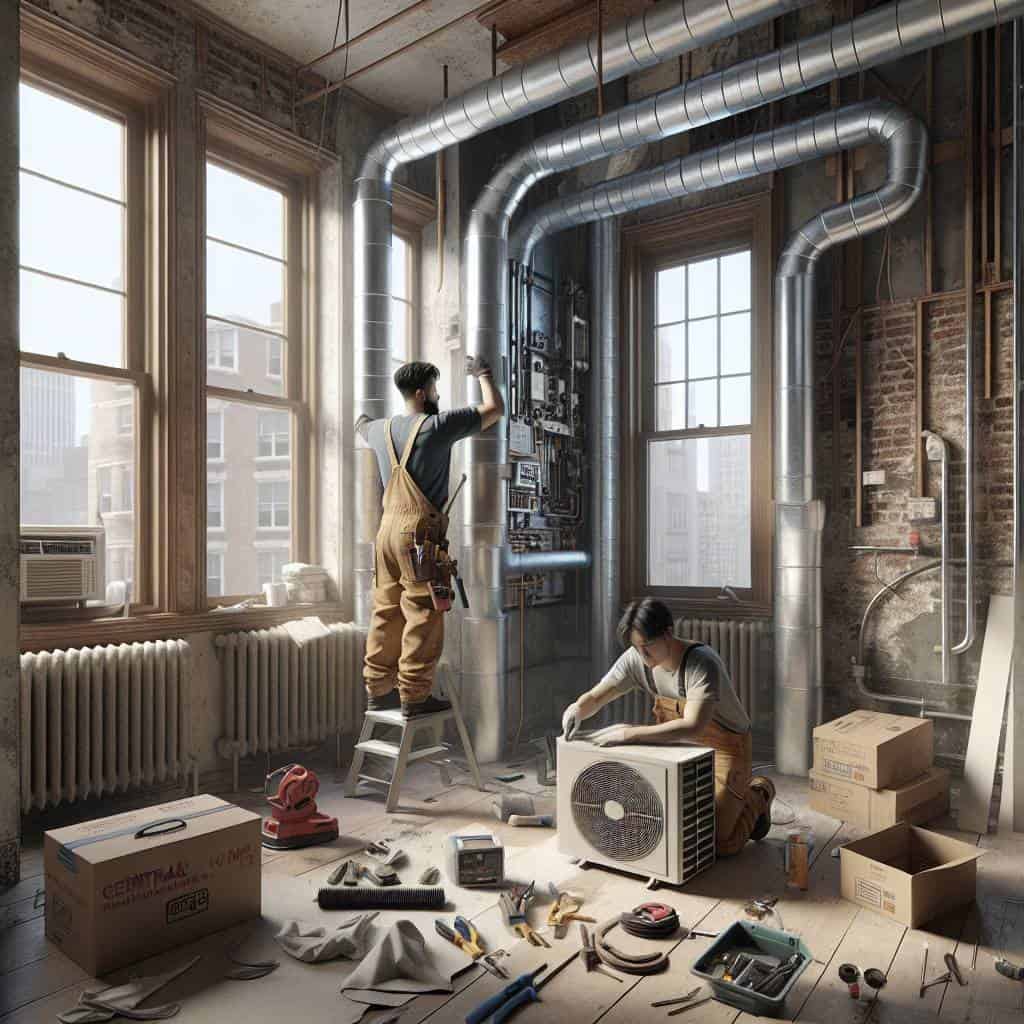
So, why am I dredging up this personal fiasco? Because you, my friend, are probably standing on the precipice of a similar decision. In this piece, we’ll journey through the tangled web of adding central air to older homes. We’ll weigh the costs, the potential boost to property value, and the inevitable headaches. Consider this your unfiltered guide—straight talk on HVAC upgrades without the rose-tinted glasses. Let’s dive into the nitty-gritty before you, too, are knee-deep in renovation debris, questioning your life choices.
Table of Contents
The Great AC Adventure: Adding More Than Just Air To Our Older Home
Installing central air in an older home is like orchestrating a symphony when you’re only armed with a kazoo. It’s not just about adding a breeze to your sweltering summer days—it’s a full-blown saga. We’re talking about ripping through walls that have stood steadfast for decades, all in the name of modern comfort. You might think you’re simply upgrading an HVAC system, but in reality, you’re embarking on a quest that could rival any Greek epic. Every step is a negotiation, a tussle between preserving the character of your home and embracing the cold, hard efficiency of modern air conditioning. And let’s not even delve into the financial circus that follows every hammer blow and duct installation.
But here’s the kicker—this journey isn’t just about immediate comfort. Sure, you’re adding cool air, but you’re also adding layers of value to your property. Older homes, with their charm and quirks, often lag behind in the modern amenity race. By integrating central air, you’re not only making summers bearable but potentially boosting your home’s worth. It’s like giving your vintage abode a turbocharged engine while keeping its classic exterior intact. In the end, it’s not just air you’re adding; it’s a future-proofing upgrade that echoes with every cold breeze. So, brace yourself. This isn’t just an installation—it’s an adventure with dividends, both in comfort and in cold, hard cash.
The Cold Hard Truth
Installing central air in an old house is like trying to squeeze a square peg into a round hole. Sure, it might fit eventually, but not without a cost—and you’ll question if it’s worth the comfort or just a chilling reminder of what you’ve sacrificed.
The Icy Rebellion Against Tradition
In the end, the chaos of retrofitting an old abode with central air was less about ducts and more about defiance. It’s a personal vendetta against the oppressive heat, sure, but also against the stubborn whispers of tradition that insist old homes should stay in their dusty, sweltering past. Why let age dictate comfort? I chose to wrestle with the beast of modern convenience, and in the process, I carved out a sanctuary against the relentless city summer.
But make no mistake, this isn’t a tale of triumph. It’s a gritty reminder that comfort comes at a cost. The creaky bones of my home groaned under the weight of progress, and I felt every penny slip through my fingers like sand. Yet, as I bask in the cool breeze, I realize this journey isn’t just about installing an HVAC system—it’s about rewriting the narrative of what an old home can be. We don’t have to be prisoners of our property’s past. Instead, we can forge a new chapter, one where comfort and history coexist, albeit in a fragile peace.
